
Hart County's Backward Deed Trail
A search for a prior owner should start with a timeline of transfers. That timeline should be more than a roster of names. Every row of that timeline needs enough detail. It must show the same tract moving from seller to buyer. Pull the most recent deed on file with the Hart County Clerk and work from there. The sample layout below shows which fields to record, using no real owners of any actual property.
| Transfer Date | Grantor to Grantee | Deed Type | Book/Page |
|---|---|---|---|
| Newest filing date | Prior holder to present grantee | Deed or transfer instrument | Current citation |
| Earlier filing date | Earlier holder to that grantor | Deed, estate, or court conveyance | Prior citation |
| Next earlier date | Previous link in the chain | Deed or correction | Older citation |
Record the executed and recorded dates separately. Save the consideration, acreage, boundary calls, roads, streams, adjoining owners, exceptions, easements, restrictions, and any plat or survey reference as well. Old deeds rarely carry a modern parcel number. The legal description, far more than a street address, is what keeps each former owner tied to the correct piece of Hart County land.
Sources for Hart's Previous Owners
Current recorded instruments sit with Hart County Clerk Felicia Shelton. Online index and image access runs through the account-based eCCLIX service. It offers no stable unauthenticated Hart County entry point. When the portal cannot answer a question, the Clerk counter can. Phone, mail, or an open-records request will also. Earlier eras of Hart County property records then lead outward to state and local archives.
| Source | Hart Coverage | What It Adds |
|---|---|---|
| County Clerk | Current custodian | Recorded deeds and related instruments |
| KDLA | Deeds 1928-1998 | Archival deed series and research requests |
| KDLA order books | 1819-1823 and 1928-1977 | Court and county actions that may explain transfers |
| KDLA wills | 1928-1997 | Estate context for an ownership break |
| Museum and library | Local collections vary | Surname files, newspapers, and reproduced material |
Those are series-level date ranges, not a guarantee that every volume or owner survives within them. An archival end date does not mean the courthouse quit keeping property records after that year. It simply describes the material listed at KDLA.
Reconstruct Hart Owners Backward
KDLA's deed-record guide advises searching both the grantor and grantee indexes. Whoever sold the land in the latest deed is the next former owner to chase. Look that person up as a grantee to find when they first took title. Then repeat the process. Let each earlier citation serve as the next rung up the ladder.
- Identify the parcel and obtain the latest full deed.
- Copy the grantor, legal description, and prior-deed reference.
- Search that grantor as a grantee under all useful name forms.
- Match the land description before adding the transfer to the timeline.
- Continue in books, archives, tax lists, or probate sources when the index trail breaks.
- Grantor
- The party who conveyed an interest.
- Grantee
- The party who received it.
- Chain of title
- The linked sequence of land transfers.
- Reverse index
- An index arranged to find parties by the opposite role or direction.
- Warranty and quitclaim
- Different deed forms whose legal effect must be read from the instrument.
From roughly 1890 onward, deeds routinely cite a prior recording. Earlier than that, property records like tax rolls may have to bridge the gaps. The gaps run between owners. Search under spouses, trustees, and executor or administrator titles. Also try sheriff, commissioner, estate names, corporate suffixes, and initials. Never force continuity where the sources themselves leave a gap.
Hart's 1928 Records Break
Hart County was formed in 1819. In 1928 a courthouse disaster destroyed part of its records, so any hunt for pre-fire former owners becomes a survival puzzle. A blank index, a missing deed book, or an absent certificate cannot alone prove no transfer happened. State archives, tax rolls, court orders, wills, and local reproductions may each hold a piece of the lost trail. Build a gap note source by source. State the last verified grantee, the next verified grantor, the missing years, and every name variant tried. Then ask whether a tax list, order book, probate case, sheriff deed, or newspaper notice can span the gap. That discipline preserves what is actually known without inventing owners.
Online cutoff is not the starting year. KDLA lists Hart deed holdings for 1928-1998. Earlier owners may require local books, tax lists, newspapers, and reproduced sources.
Researchers chasing old deeds in Hart County Historical Society Museum collections will find surname files and other genealogy help. The museum's account of the courthouse fire confirms that deeds were among the lost materials. It also credits Roy Cann. He spent years of labor reproducing records that went up in flames. Treat any transcript or reproduction as a derivative copy. It is no substitute for the original. A second, independent source should always back up whatever the derivative claims.
Hart Estate Transfer Gaps
A tidy deed-to-deed chain can snap when an owner dies. Search the decedent, spouse, heirs, fiduciary, estate name, will book and page, probate case, affidavit of descent, and commissioner deed. Then check deeds from heirs. Set the death date beside the PVA change date and compare land descriptions. A will or an appointment names the players. It may not convey the land itself. KDLA's county inventory lists Hart wills from 1928 through 1997. It also lists civil cases from 1928 through 1986. Current court files start with the Hart Circuit Court Clerk. Ask whether a file sits at the courthouse or a records facility. It may instead have been disposed of under retention. For archival help, the KDLA request service accepts deed and probate categories.
Match Old Hart Land Descriptions
An old Hart County deed may describe land by metes and bounds, acreage, named roads, streams, adjoining owners, or an old survey rather than a street address. Metes and bounds simply means courses, distances, and monuments. Compare those calls across the deed, plat, PVA acreage, and survey. An acreage mismatch may trace to a right-of-way, a map calculation, a parcel split, or a later survey. When no parcel number appears, ask the PVA about a historical crosswalk. When no street number exists, search deed records by owner, road, district, acreage, neighbors, and boundary calls. Hart County's own guidance notes that an unrecorded deed and surveyed plat should be recorded, a hint that address work may stall until the tract itself is well described.
Hart Archives Beyond Deed Books
The Hart County Public Library keeps genealogy and reference material. Its collection includes newspapers and databases you can use on site. FamilySearch offers a full-text Kentucky wills and deeds collection. Images may require an account or a visit to a center. Newspaper legal notices are handy too. They can place an estate sale, a commissioner action, or a surname in time.
Hart County's own history mentions an 1850s railroad bridge and three Civil War battles. Those place names help decode old deeds. A deed may describe a bridge or a crossing. It may also reference a military road, a cemetery, or a neighbor rather than a modern address. Context alone never settles a boundary. Confirm the land with deed calls, a recorded plat, or a survey.
The Kentucky Department for Libraries and Archives handles records requests through its official page.
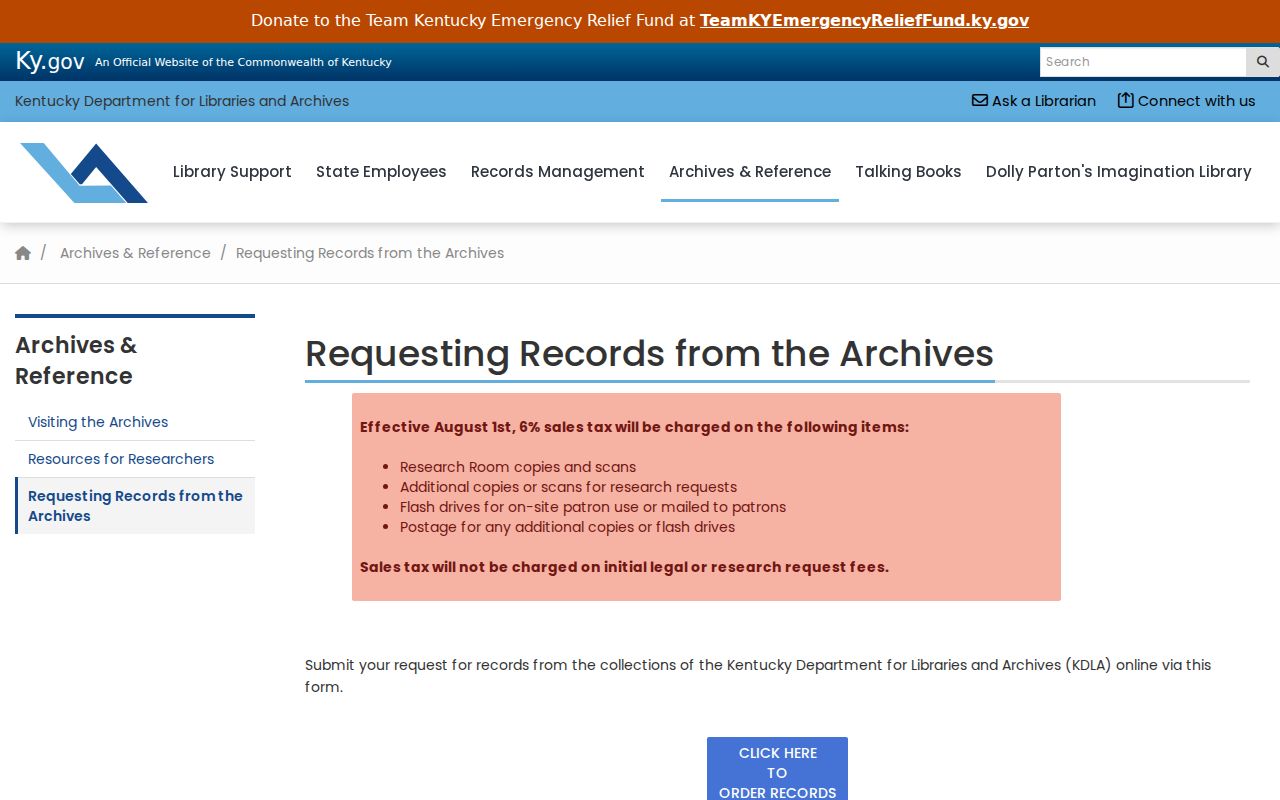
This page lays out the archival request route for a Hart County owner chain that reaches past what the Clerk currently provides.
How Far Hart Ownership Goes
No single "online since" year exists for Hart County's public deed index. State archival holdings for the listed deed series begin at 1928. The county is far older than that. A fire destroyed some volumes, and others survived under local custody. How far a chain can be traced depends on the fire. It also depends on the volumes that survived and where records were held. Citation quality matters too.
Preserve uncertainty. A missing transfer after the 1928 disaster is an unresolved link, not proof that one owner held the tract throughout the gap.
Write down the exact span you could not resolve. List every custodian you checked. Then branch out to tax lists, order books, wills, newspaper notices, FamilySearch, the museum, the library, and Kentucky historical finding aids. Former-owner research serves a house history, an estate, purchase diligence, or a boundary dispute. Never use it to harass or target a living person.
For each former owner, cite the instrument or alternate record behind the name. Family lore alone is not enough, even when the story seems to fit the property.
Note: A prior-owner timeline is research evidence, not a substitute for a professional title examination or boundary survey.