
Hart County Owner Record Card
The Hart County Property Valuation Administrator keeps the assessment roll. Its basic ownership search is free. Pulling a parcel card connects the current owner of record to the tract itself. The card typically shows the physical location, mailing name, parcel identity, assessment, taxing district, acreage, and any sales details on file. Subscription material can add more. It includes transfer history, photos, improvement characteristics, property class, and tax information where available.
| Owner name | The person, trust, estate, or entity carried on the assessment roll |
|---|---|
| Mailing address | The destination for tax notices, which may differ from the property |
| Physical address | The situs, meaning the location of the tract |
| Parcel number | The county identifier used to cross-check map and tax records |
| Last sale | A date and amount when the card reports them |
| Deed reference | A book/page or similar clue when supplied |
An owner of record is simply the name carried in a government record. It does not identify an occupant. A mailing name is not proof of title. Read any blank parcel field as not reported rather than as none. Anchor the search to the right land with the parcel number and the legal description.
How Current Is Hart's Roll?
The PVA FAQ gives a concrete timing caution. Property is assessed as of January 1. When a purchase occurs after that date, the tax roll may continue to show the former owner until the following year. The lag is normal roll administration, not evidence that the sale failed. A current owner search near a closing date should therefore note when the PVA result was viewed.
Check the latest filing. A just-recorded deed can be newer than the Hart County owner of record shown on the annual assessment roll.
Name changes follow the same rulebook. The PVA requires an official deed, will, or death certificate. Only then will it change, add, or remove a name. A casual request to update a mailing address cannot establish title. If the owner field looks misspelled or stale, bring the supporting instrument to the PVA. Keep the original deed reference too.
The tax portal adds another time-stamped cross-check. Its Mailing Name or Name on Statement label is not automatically the deed grantee. Save the tax year with any result. A tax balance proves neither ownership nor occupancy. When two systems disagree, label each field by its actual source. Do not merge the names into one claim.
Hart Owner Search Inputs
Start with the PVA search and its qPublic vendor interface. Enter the full street address first. If no parcel appears, try road-name and suffix variants. An owner-name search works best when you test initials and entity suffixes, and a parcel number is the cleanest key for crossing between systems once you know its format.
| Input | What to Match | Main Risk |
|---|---|---|
| Address | Physical location and parcel number | Road wording or no street number |
| Owner name | All parcels under the same displayed name | Initials or similar names |
| Parcel ID | One assessment account and tax-map tract | Split, merge, or old numbering |
The captured qPublic selector below comes from the official vendor entry point.
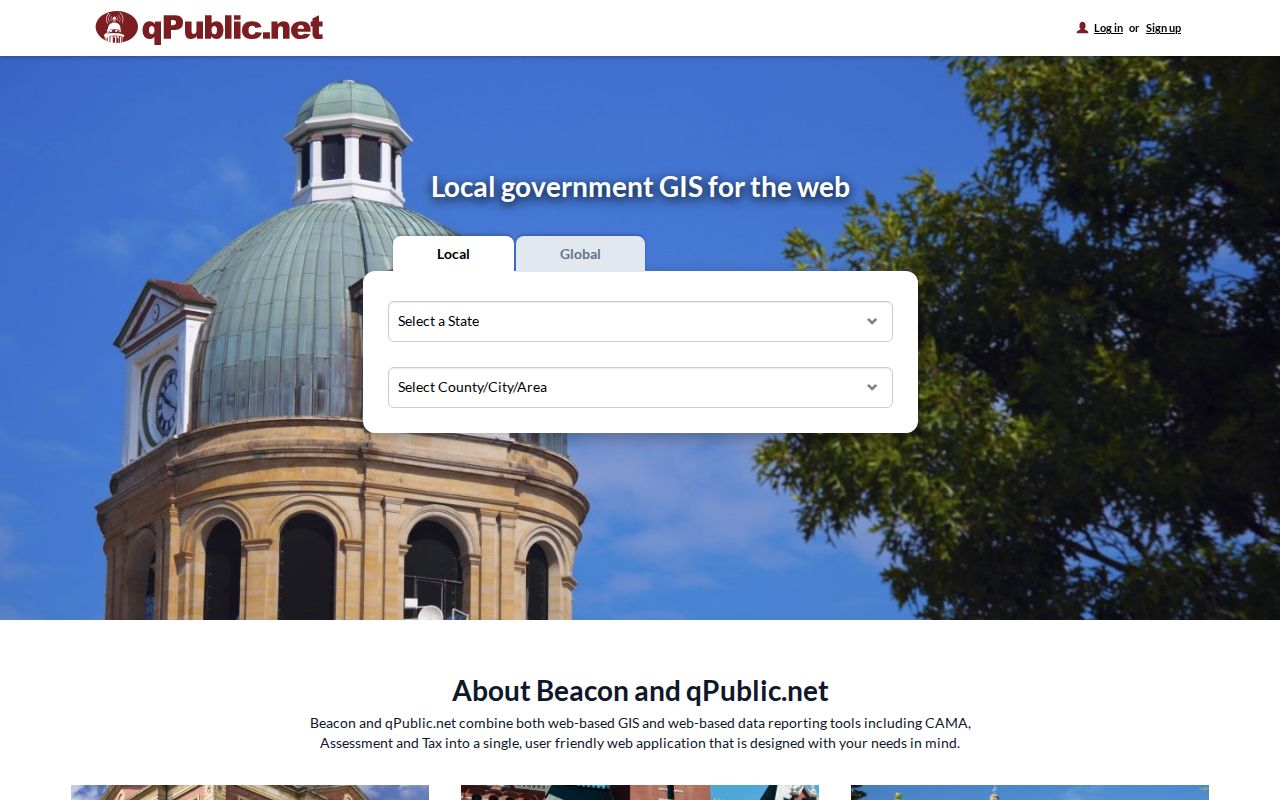
The county publishes no stable Hart-only deep link to the search. Use the county PVA link and select the correct jurisdiction instead of trusting an old bookmark.
Confirm Hart County's Current Owner
A present-tense owner check stops at the newest transfer. It does not rebuild the older chain. Record the PVA owner name, parcel number, situs, and the lookup date. Then run that name as a grantee in the County Clerk's deed index. Match the legal description and any PVA deed reference. Do that before treating a similarly named result as the same tract.
- Save the PVA owner name, physical address, mailing address, and parcel number.
- Ask the Hart County Clerk for the newest deed or related transfer instrument.
- Compare grantee, legal description, execution date, recording date, and prior reference.
- If the deed is newer, treat it as the stronger transfer record and ask the PVA about the next roll update.
- Owner of record
- The party named in the assessment or land record.
- Assessment roll
- The PVA's property list used for assessment.
- Situs
- The physical location of land, not its tax-mailing destination.
- Recording lag
- Time between a conveyance and its appearance in another county system.
The eCCLIX vendor supports party/date and book/page/type searching. The county publishes no stable, unauthenticated Hart deed result online. If online access fails, use the Clerk counter, phone, mail, or the standardized open-records form. The general Hart County deed records process explains copy routes. It does not turn this owner check into a title-chain search. The newest deed still settles who holds the parcel.
Hart Property Held by an Entity
A PVA owner field may show an LLC, corporation, trust, or estate. The entity name appears instead of a person. Copy that wording exactly. For a Kentucky business, search the Secretary of State business database by organization name or ID. Current officers reflect the latest annual report. A registered agent is a service contact. Neither role means that person owns the real estate personally.
Trustees of trusts do not appear in the Secretary of State officer search. For them, return to the deed and any recorded affidavit. For an estate, compare the deed with probate filings. A will, an affidavit of descent, or a commissioner deed also helps. A probate appointment alone does not convey land.
Hart Mailing and Situs Names
The PVA card separates the land's location from the name and address used for statements. The OpenGov tax portal does the same. An out-of-county mailing address is usually nothing unusual. It may belong to the same owner, an entity office, or a tax-contact service. It still does not show who lives at the parcel.
Use the situs to locate the tract and the parcel number to cross-check it. Use the mailing address only for lawful property correspondence. For a rural tract without a street number, combine the road name, parcel ID, deed calls, acreage, tax-map reference, and neighboring parcels. When an older deed predates the modern map, ask the PVA for a crosswalk.
Note: A mailing address routes tax notices; it does not identify occupancy or replace the latest recorded deed.
Protected Hart Owner Addresses
Kentucky runs a Safe at Home program for qualifying residents. It provides a substitute address. The compliance rules do allow real-estate and bona-fide-need exceptions. Even so, a public search of Hart County property records should never be used to defeat an address protection. Ask the records custodian what may lawfully be released, and accept a substitute address or a redaction when that is the answer.
Frame any record request around the minimum data needed. That means the parcel number, the property address, book and page, a date span, the instrument type, and the party names. Never request or republish Social Security numbers, account numbers, signatures, victim details, or protected physical addresses.
The Kentucky Open Records Act can obtain existing nonexempt records. It cannot make an office create a fresh title conclusion. A narrow request for one parcel card or one recorded instrument moves faster than a broad demand for every record tied to a person.
Contact a Hart Property Owner
Use the tax-mailing address when it stays public. A short letter works best. Name the parcel, then state your reason, such as a boundary question, a possible purchase, an easement concern, or an estate matter. Do not assume the recipient occupies the land. Never republish the address elsewhere merely because a public record shows it.
Use records lawfully. A Hart County current-owner record supports legitimate property research. Never use it to harass, intimidate, stalk, or target a person.
Sometimes the owner field and the newest deed conflict. State both sources with their dates. Ask the PVA which instrument is needed for correction, then verify the filed deed with the Clerk before trusting either name.